
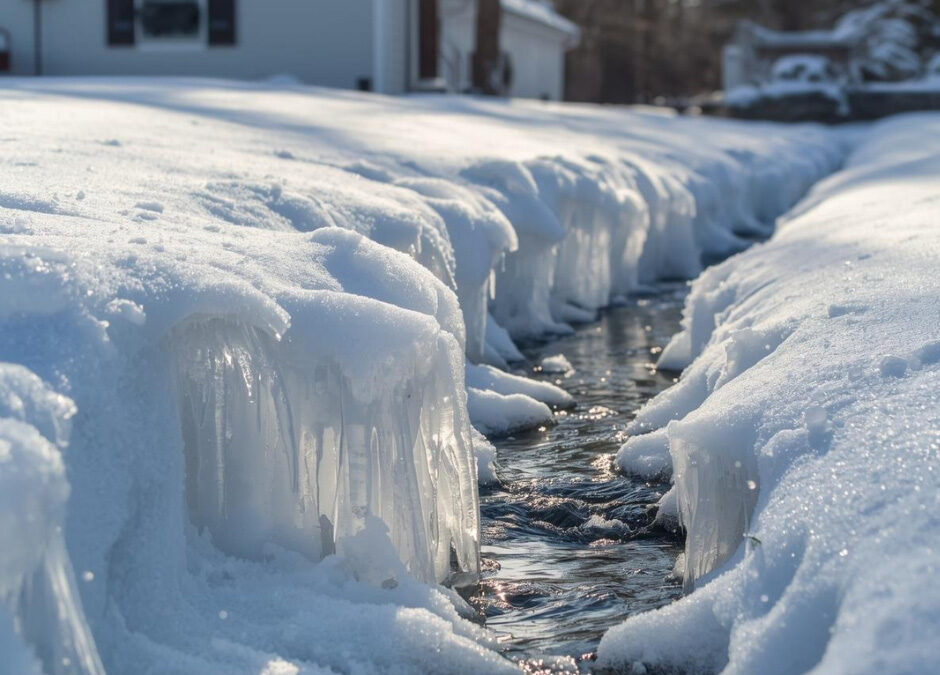
As temperatures fluctuate throughout February, the melting snow and ice in Essex County can quickly turn into a headache for homeowners. This winter thaw might feel like a relief from the cold, but it frequently uncovers hidden leaks and drainage vulnerabilities that lead to costly water damage.
The Threat to Your Foundation
Basements are the primary target during a fast melt. When heavy snow turns to water, it saturates the ground, creating immense pressure against your foundation. Water finds its way through:
- Hairline cracks in the slab or walls.
- Window wells that haven’t been cleared.
- Gaps where utility lines enter the house.
If a sump pump fails or simply can’t keep up with the volume, a basement can flood before you even notice a problem.
Proactive Steps to Take Now
You can mitigate these risks with a few targeted maintenance tasks:
- Clear the Runoff: Confirm that gutters and downspouts are free of debris and direct water at least six to ten feet away from your foundation.
- Watch for Pooling: If you see “mini-ponds” forming near your walls, your yard’s grading may need adjustment to slope water away from the structure.
- Internal Inspections: Check your basement walls for damp spots, musty smells, or peeling paint—all early warning signs of seepage.
The Pipe Expansion Cycle
Plumbing is also vulnerable during thaw cycles. Rapid shifts between freezing and melting causes pipes to expand and contract, which can trigger cracks or loose fittings. To stay safe, keep your thermostat at a steady temperature and add insulation to any plumbing located in unheated areas like crawlspaces or attics.
Staying ahead of the melt helps keep your home dry and reduces the need for filing a claim. At Patrick J Woods Insurance, we’ve seen how a little preparation goes a long way in protecting your property.